
How to Train for Your First 5K Paddleboard: A Beginner's Guide to SUP Fitness

Imagine starting your morning on the water, surrounded by beautiful scenery, moving your body, and building strength with every paddle stroke.
That's one of the things we love most about stand-up paddleboarding (SUP). It combines outdoor adventure with a full-body workout, offering a refreshing alternative to traditional gym-based exercise.
But what if you could take your paddling beyond the occasional recreational outing and turn it into a consistent fitness routine?
Whether you're completely new to stand-up paddleboarding or you've already enjoyed a few casual paddles, training for your first 5K paddleboard adventure is an exciting and achievable goal for many beginners.
At Paddle Into Fitness, we believe that learning proper technique, developing water safety skills, and following a progressive training program are the foundations of becoming a confident paddler.
Here's how to get started.
Why Stand-Up Paddleboarding Is an Excellent Full-Body Workout
Unlike traditional workouts that isolate specific muscle groups, stand-up paddleboarding challenges multiple areas of the body simultaneously. When performed with proper technique, paddling engages your:
Core muscles: Your abdominals, obliques, and back muscles help stabilize your body and transfer power through each stroke.
Legs and glutes: Your lower body continually makes small adjustments to maintain balance and stability.
Shoulders and upper back: These muscles contribute to paddle control and movement, although efficient technique should not rely exclusively on the arms.
Cardiovascular system: Sustained paddling can improve aerobic endurance as you gradually increase your time and distance on the water.
One of the greatest advantages of SUP fitness is its versatility. A relaxed paddle on calm water can provide gentle, enjoyable movement, while a more challenging session incorporating intervals or longer distances can create a demanding cardiovascular workout. You can adapt the intensity to your experience, fitness level, and goals. And perhaps the best part? You're exercising outdoors, surrounded by nature.
Start with Proper Paddleboarding Technique
Before focusing on speed or distance, it's important to develop efficient paddle mechanics. One of the most common mistakes beginners make is attempting to generate all their paddling power through their arms. This can lead to unnecessary fatigue and inefficient movement. Instead, focus on creating a coordinated, full-body stroke.
1. Establish a Stable Paddling Stance
Position your feet approximately hip-width apart, with your knees slightly bent and your weight distributed evenly. Keep your gaze forward rather than looking directly at your feet. Your body should feel athletic and relaxed—not rigid. Think about maintaining a tall posture while allowing your knees and hips to respond naturally to the movement of the board.
2. Engage Your Core and Torso
An efficient paddle stroke involves more than pulling the paddle backward with your arms. Your torso, shoulders, and hips work together to help generate power. Reach forward with control, engage your core, and move the paddle through the water with coordinated body movement. This distributes the workload across larger muscle groups instead of placing excessive demand on your shoulders and arms.
3. Keep Your Paddle Stroke Efficient
As you place the paddle blade into the water, aim for a clean, controlled entry. Pull the board forward past the planted blade, keeping the paddle relatively close to the board. Release the blade around your feet instead of pulling far behind your body. A long stroke isn't necessarily a better stroke. Focus on consistency, control, and technique before trying to increase your speed.
4. Practice Paddling on Both Sides
Alternating sides helps maintain your direction and develop balanced paddling skills. As you improve, you'll learn to recognize when to switch sides, how to correct your course, and how to use different strokes to maneuver your board.
Beginner tip: Practice your paddling technique on land before getting into the water. This allows you to focus on posture, body rotation, and paddle positioning without worrying about balance.
Water Safety Comes Before Fitness
Before beginning any SUP fitness program, make sure you understand the conditions and equipment required for safe paddling. Choose a calm, protected location for your first sessions and avoid strong winds, currents, heavy boat traffic, and challenging surf. Always check the weather forecast and pay particular attention to wind direction. Offshore winds can quickly carry paddlers away from shore, even when the water initially appears calm. Wear an appropriately fitted U.S. Coast Guard-approved personal flotation device (PFD), follow applicable regulations, and choose a leash appropriate for your paddling environment. Leash selection is especially important in moving water, where entanglement hazards can make conventional ankle leashes dangerous. You should also know how to fall safely, remount your board from the water, and return to shore if conditions change. The U.S. Coast Guard recommends wearing an appropriate life jacket while underway, and its boating guidance addresses PFD requirements for paddleboards. A SUP lesson with a qualified instructor is an excellent way to build these foundational skills before beginning independent fitness training.
How to Progress from Beginner to a 5K Paddleboard Adventure
A 5K paddle is approximately 3.1 miles. For someone new to stand-up paddleboarding, that distance may initially seem intimidating. However, just as beginner runners can gradually work toward completing a 5K, paddlers can build the technique, endurance, and confidence needed to cover longer distances. The key is progressive training. Rather than attempting long-distance paddles immediately, begin with manageable sessions and gradually increase your time on the water. Our Paddle Into Fitness Intro to SUP + 12-Week Beginner SUP Fitness Program follows a structured, beginner-friendly approach with three paddle workouts per week, complemented by yoga, fitness, warm-ups, and cool-downs. The following overview illustrates the general principles behind building toward a 5K. It is not a substitute for the program's complete weekly workouts.
Weeks 1–4: Build Your Foundation
During your first several weeks, focus on becoming comfortable with your equipment and developing basic paddleboarding skills.
Priorities include:
Learning to launch, stand, balance, and remount your board.
Practicing proper forward-stroke technique.
Developing basic turning and stopping skills.
Establishing a comfortable, sustainable paddling rhythm.
Understanding weather, water conditions, and essential safety procedures.
During this phase, consistency is more important than distance.
Short, controlled paddling sessions can help you develop confidence without unnecessary fatigue.
Weeks 5–8: Develop Strength and Endurance
Once you've established a foundation, begin gradually extending your paddling sessions.
This is where SUP fitness becomes particularly rewarding.
You may notice that you're able to paddle longer without stopping, maintain better balance, and generate more power through your strokes.
Continue practicing technique while introducing appropriate variations in intensity.
For example, a training session might alternate periods of comfortable paddling with brief intervals at a slightly faster pace.
The goal is to challenge your cardiovascular system without sacrificing technique.
Remember that conditions on the water affect workout intensity. A short paddle into the wind can be significantly more demanding than a longer paddle on calm water.
Use your perceived exertion—not distance alone—to guide your effort.
Weeks 9–12: Build Toward Your 5K Goal
As your endurance improves, begin preparing for longer, continuous paddles.
Focus on maintaining a comfortable rhythm, pacing yourself, and conserving energy.
Practice selecting appropriate routes and understanding how wind, current, and water conditions may influence your return trip.
By the final weeks, your goal is to feel confident managing your board, maintaining efficient technique, and sustaining an appropriate effort over a longer distance.
For many beginners, completing a 5K becomes a meaningful milestone.
However, everyone's progression is different. Some paddlers may need additional weeks to build their endurance, and that's perfectly fine.
The real accomplishment isn't how quickly you finish. It's developing the skills and confidence to enjoy paddling for years to come.
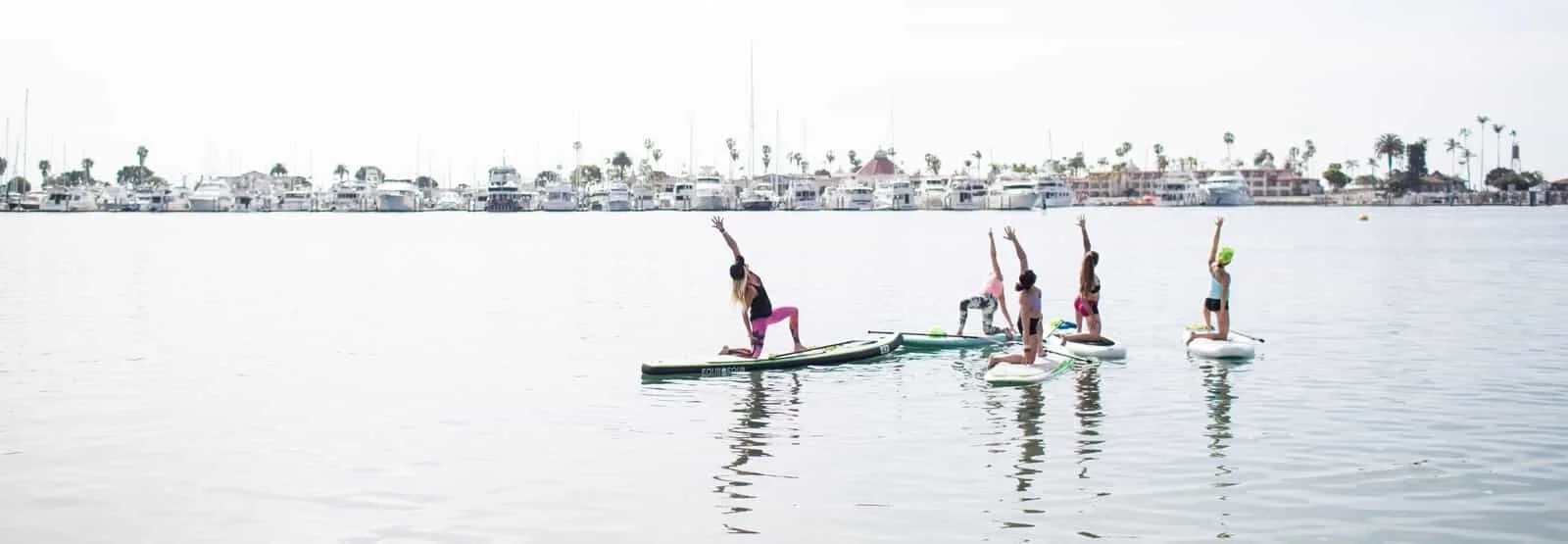
Why Yoga and Strength Training Complement Paddleboarding
Paddleboarding challenges your balance, coordination, and muscular endurance. Complementary exercises can help you develop the physical qualities needed for efficient paddling.
Yoga for Mobility and Balance
Yoga can support flexibility, body awareness, and controlled movement. Movements emphasizing thoracic rotation, hip mobility, and shoulder mobility may be particularly useful for paddlers. Balance-focused postures can also help you become more comfortable adjusting your body position.
Strength Training for Paddling Performance
Strength exercises can help develop the muscles used to stabilize your body and generate power. Consider incorporating exercises such as squats, rows, hip hinges, and appropriately modified planks into your fitness routine. The goal isn't simply to become stronger. It's to develop the strength and movement control that support efficient, sustainable paddling.
Warm-Ups and Cool-Downs
Before paddling, spend a few minutes preparing your body with gentle dynamic movement. Arm circles, trunk rotations, hip mobility exercises, and controlled squats can help you transition into activity. After your paddle, gradually reduce your intensity and finish with comfortable mobility or stretching exercises. These simple habits can help make your fitness routine more consistent and enjoyable.
Five Common Beginner SUP Fitness Mistakes
Even enthusiastic beginners can develop habits that make paddling more difficult than necessary.
Here are five mistakes to watch for.
1. Pulling primarily with the arms. Instead, coordinate your torso and larger muscle groups to produce a more efficient stroke.
2. Looking down at the board. Keep your eyes focused ahead to help maintain balance and awareness of your surroundings.
3. Paddling too far behind your feet. An excessively long stroke can reduce efficiency. Focus on a controlled entry, power phase, and release.
4. Increasing distance too quickly. Build endurance progressively rather than attempting challenging distances before you're ready.
5. Ignoring changing conditions. Wind, current, and water temperature can dramatically affect the difficulty and safety of a paddle. Always prioritize your ability to return safely. Developing good habits early makes a difference as you progress.
Can You Learn SUP Fitness Online?
Yes! Online instruction can be an excellent educational resource for beginners, particularly when combined with appropriate hands-on practice. Our Intro to SUP + 12-Week Beginner SUP, Yoga & Fitness Program was created to help new paddlers build a strong foundation and progressively develop their skills. The program includes an introductory paddleboarding course covering equipment, water safety, stroke technique, and turns. From there, you'll follow a structured 12-week training program featuring three paddle workouts each week. You'll also receive warm-up and cool-down videos, complementary yoga and fitness sessions, and access to a private online paddling community. You can work through the educational material at your own pace while building your paddling experience in suitable conditions. For complete beginners, we recommend pairing online learning with an in-person lesson to practice essential water skills and receive individualized feedback.
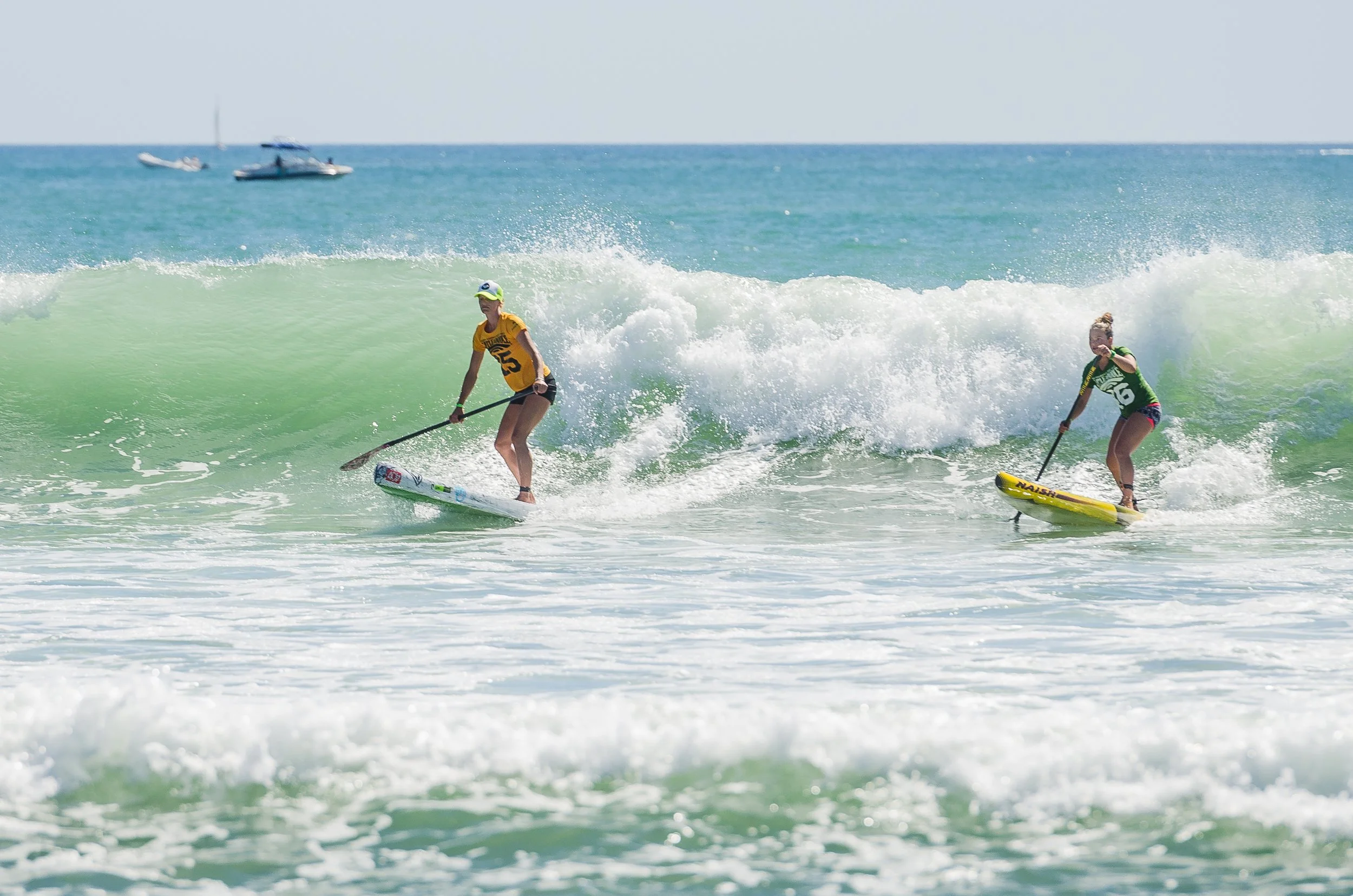
Start Your Paddleboarding Journey with Paddle Into Fitness
Stand-up paddleboarding is more than an outdoor workout. It's an opportunity to explore new places, challenge yourself, connect with nature, and discover what your body is capable of doing. Whether your goal is to improve your fitness, refine your paddle technique, or complete your first 5K, the journey begins with building a strong foundation. At Paddle Into Fitness, we combine professional paddling instruction, water safety education, and progressive fitness programming to help paddlers develop confidence and skills on the water.
Ready to get started?
Explore our Intro to SUP + 12-Week Beginner SUP Fitness Program and begin working toward your first 5K paddleboard adventure. Prefer learning in person? Join us for a private SUP lesson or workshop in Ventura, California.
Learn. Paddle. Progress.
Your next adventure starts on the water.